How to Make Spherified Fruit Juice

This is the third post in a series about planning a molecular gastronomy dinner party. Click here to read the first post about the blueprint for the big feast. These posts are also being featured on food52!

Spherification, the process of turning a liquid into little caviar-like spheres that pop in your mouth, was one of the techniques I was most excited to try out for my molecular gastronomy dinner party.  I had never tasted anything prepared in this way, but, much like with the powdered olive oil, I was in love with the gimmick.  Maybe it’s not everyone’s cup of tea, but I totally dig the idea of serving something familiar and delicious in a completely new way. 

Again, I have to credit Top Chef for the inspiration.  Chef Grayson Schmitz made a dish with a dill caviar, and explained that spherification was one of the easier molecular gastronomy techniques. Awesome! Super cool and easy to make? I was sold. I knew I wanted to make spheres as an accompaniment to something on the cheese plate course.  I searched online for ideas, and found a beautiful recipe for prosciutto with cantaloupe spheres – a simplified version of a dish served at El Bulli.  But I had to abandon this idea when I learned that the birthday boy didn’t like cantaloupe.  So, I decided to keep it simple and make a honey caviar to serve on slivers of Iberico- a semi-firm, manchego-like Spanish cheese.  Just for fun, and to practice the technique, I decided to make an apple juice caviar.  (Note: The recipe I used was from Sketchy’s Kitchen, but that post is no longer available after a site upgrade.)  Here’s what happened!
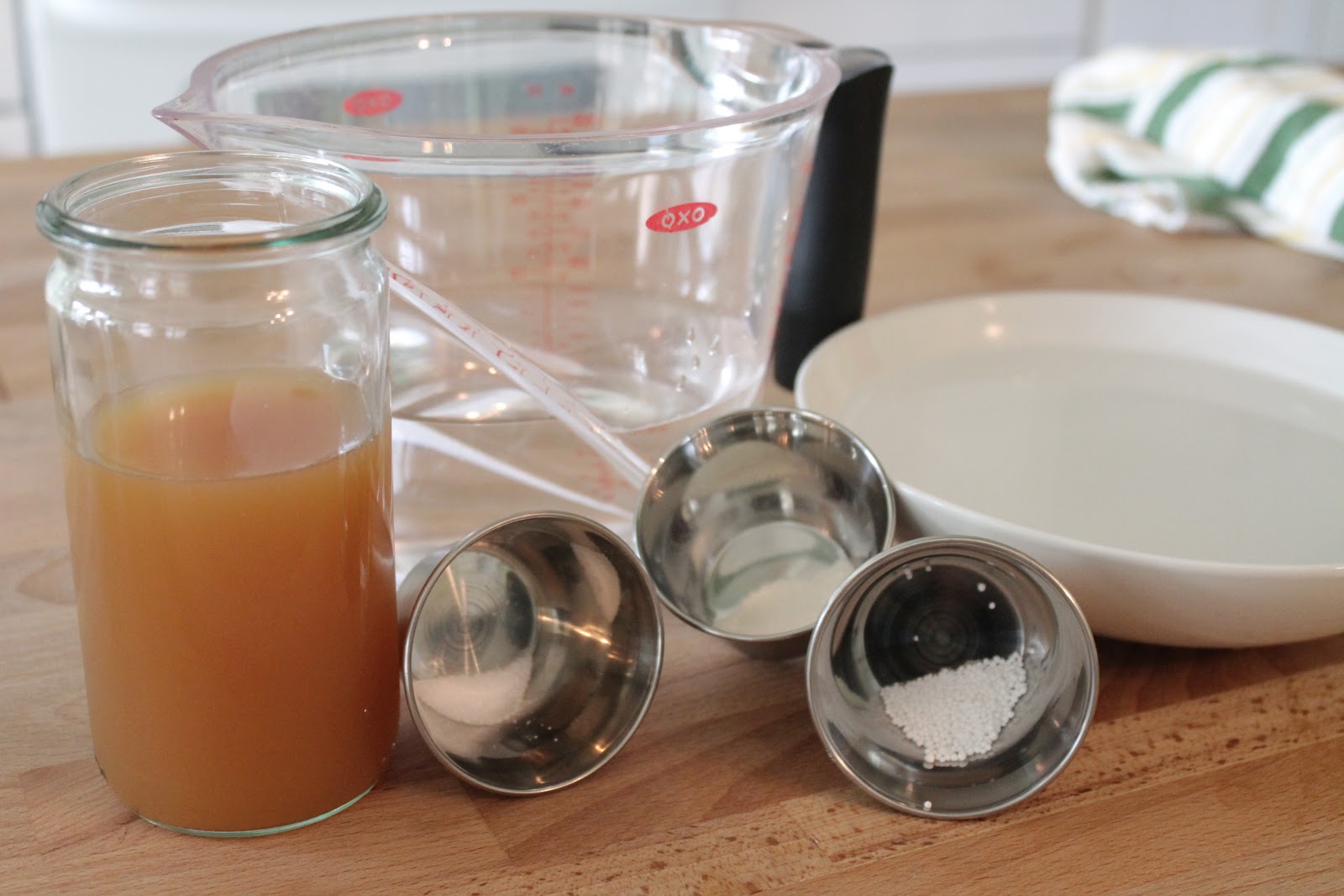
The ingredient shot.  8 ounces apple juice, 1/2 tsp sodium alginate, 1/8 tsp sodium citrate, 2 cups of water, 1/2 tsp calcium chloride, plus an additional water bath.  
Basic spherification requires only that you mix an alginate with a liquid and drop that mixture into a calcium bath.  But! If your liquid is too acidic (has a pH above 5), your spheres won’t form unless you add sodium citrate.  So if you’re experimenting with different liquids, you’re probably going to need to find yourself some pH paper. 
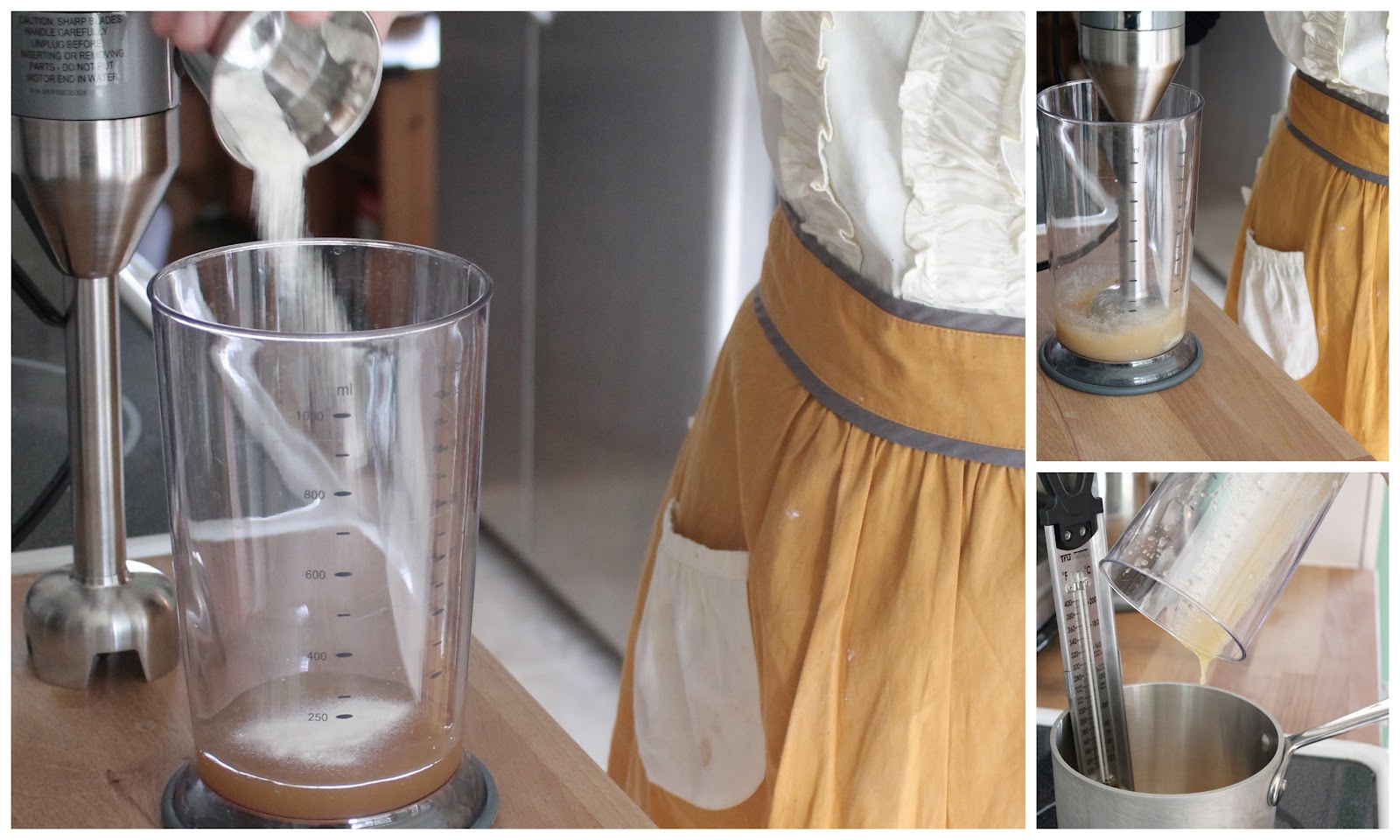
I thought I would just be able to mix the sodium alginate into the apple juice with a few quick strokes of a fork, but alas.  Turns out the alginate is very reluctant to dissolve, so you’ve got to mix it into a third of your juice using an immersion blender (a process that can take up to a minute).  Then, since you’ve aerated the mixture so much, you’ve either got to wait 12 hours or so for the bubbles to leave the liquid (bubbles = bad spheres), or else heat the mixture to 205 degrees. This didn’t seem like the easy technique I’d signed up for. 
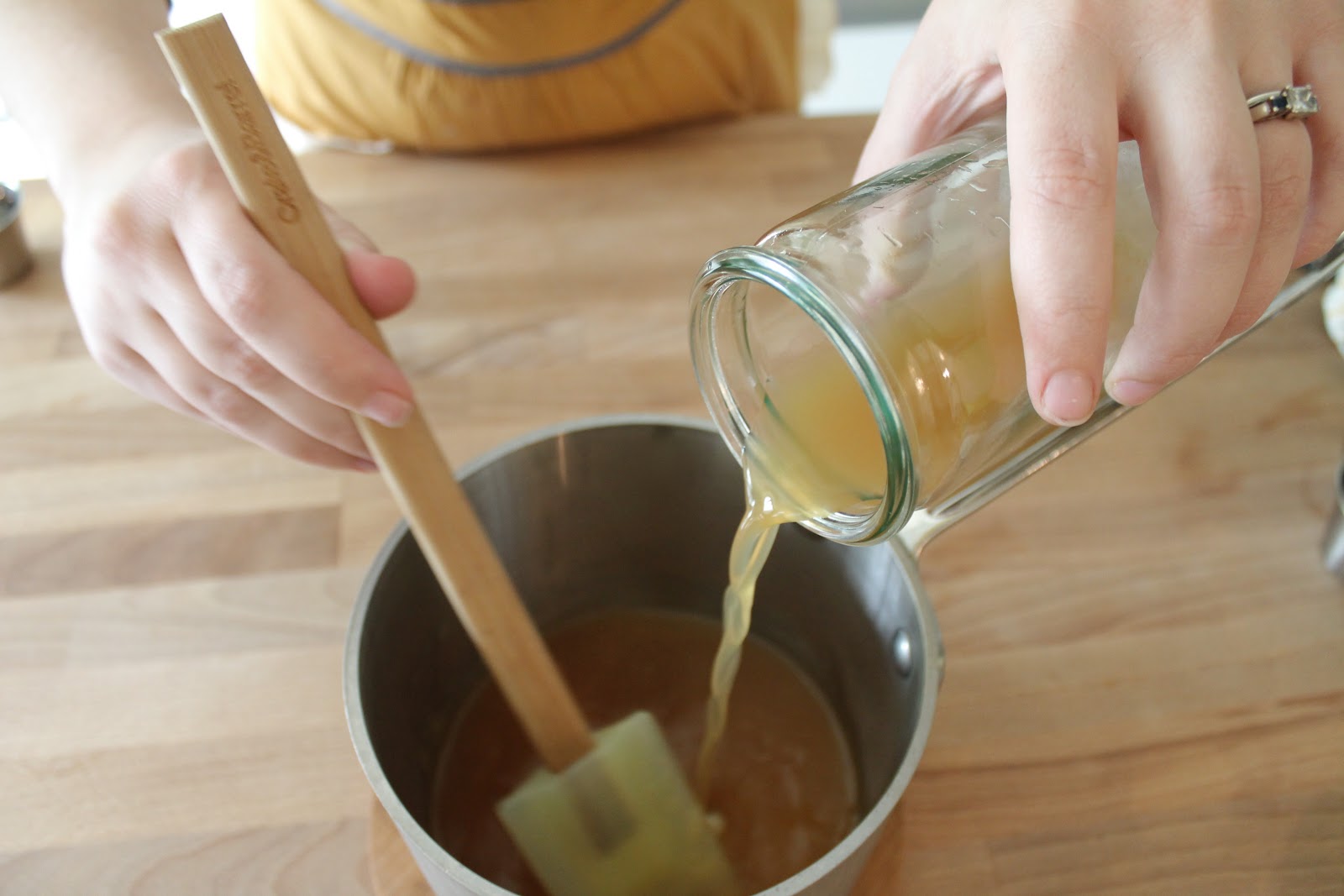
Once the mixture reached 205 degrees, I stirred in the rest of the apple juice and the sodium citrate, and then refrigerated the liquid until it had cooled down to near room temperature. 
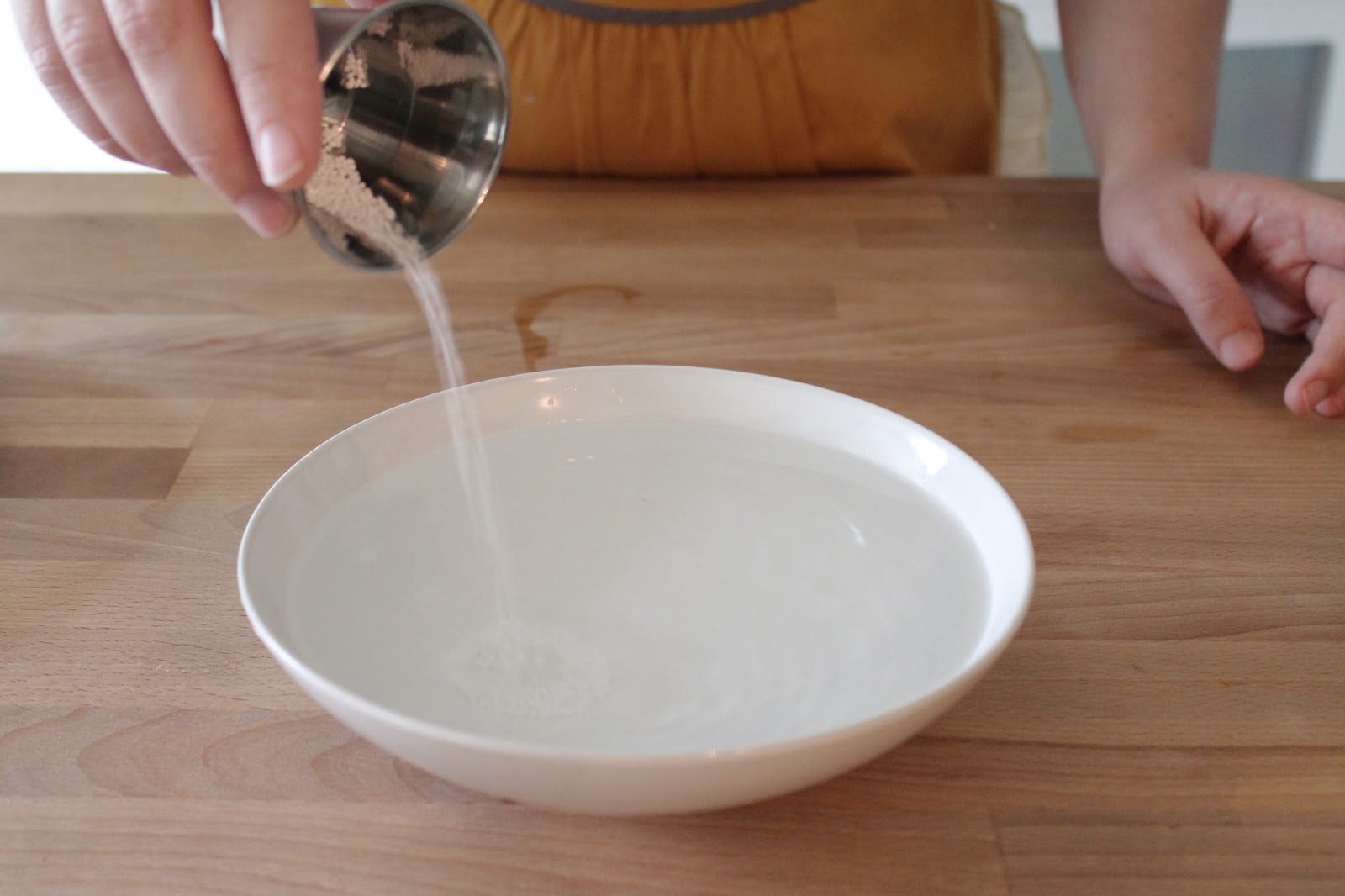
Meanwhile, I made the calcium bath by mixing the 1/2 teaspoon of calcium chloride with two cups of water in a shallow bowl.  You have to whisk the bath a bit to get the sprinkles of calcium to dissolve.  (If you don’t you might unwittingly coat your apple juice spheres in a chalky, salty  layer of undissolved calcium, which your taste tester will not appreciate.)
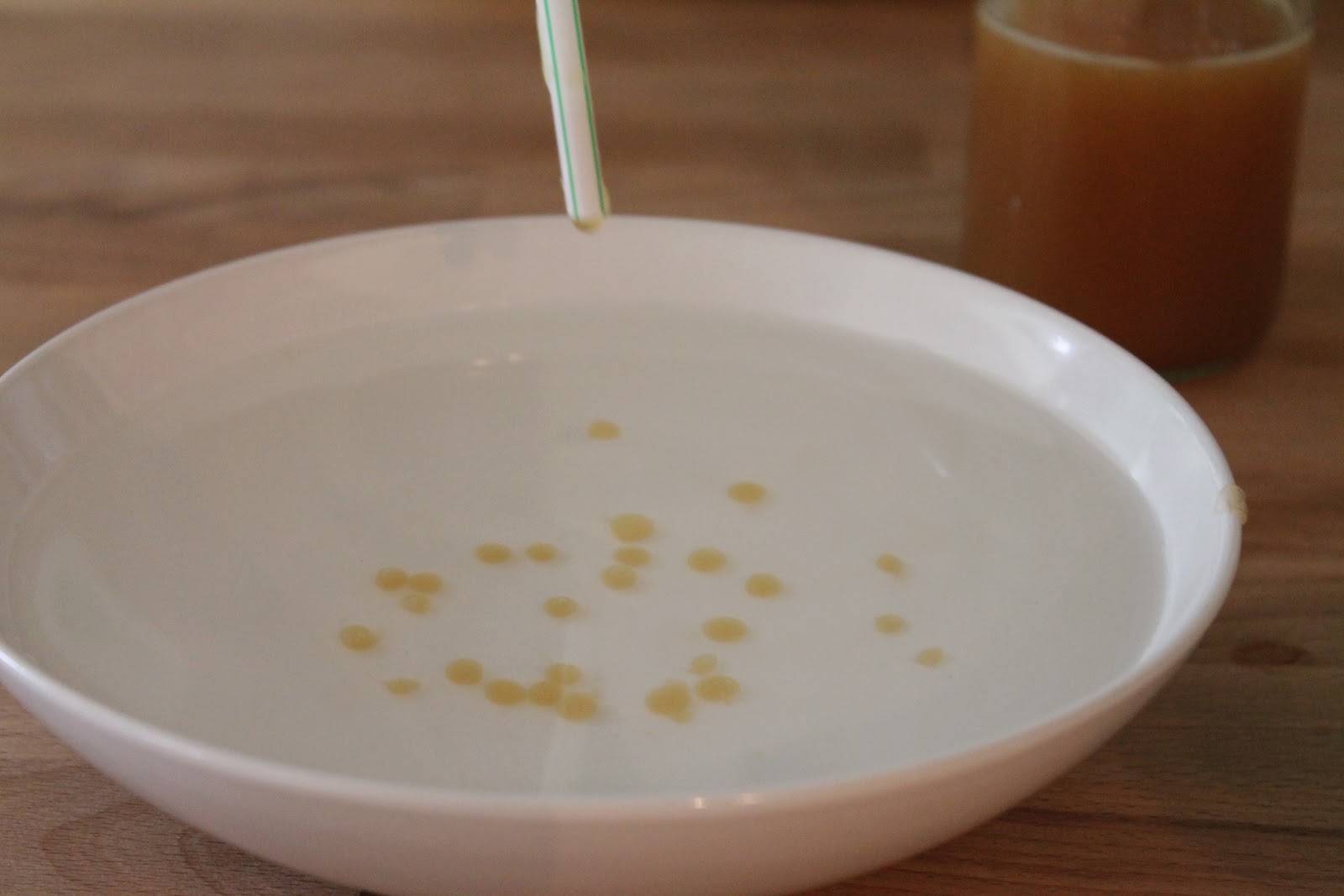
Ok.  I didn’t buy the syringe you’re supposed to used to make these spheres.  I thought I could just use a pipette, or failing that, a plastic squeeze bottle.  These both failed miserably.  The pipette made drops that were way too tiny and hardened almost as soon as they hit the water.  The squeeze bottle made long ropy noodles of apple juice which were actually kind of cool, but looked completely horrifying.  The winning sphere-ifier turned out to be a plain old drinking straw! I just held my finger over the top of the straw and let the juice slip out one drop at a time. This worked, and was free, but I’d have liked to have the syringe. 
You’ve got to drop the liquid into the calcium bath pretty rapidly, because if the spheres sit in the bath for too long (more than about 45 seconds or so), then they’ll turn into completely solid goo-balls instead of the thin-skinned caviar filled with juice you’re going for.  So, after 45 seconds, you hurriedly scoop the spheres out of the bath with your slotted spoon. (Again, you should buy the spoon with tiny holes that was made for this job.  I thought I could get by with my tiny sieve, but it was a nightmare trying to chase those spheres around the bowl.) And, at last, ta da!
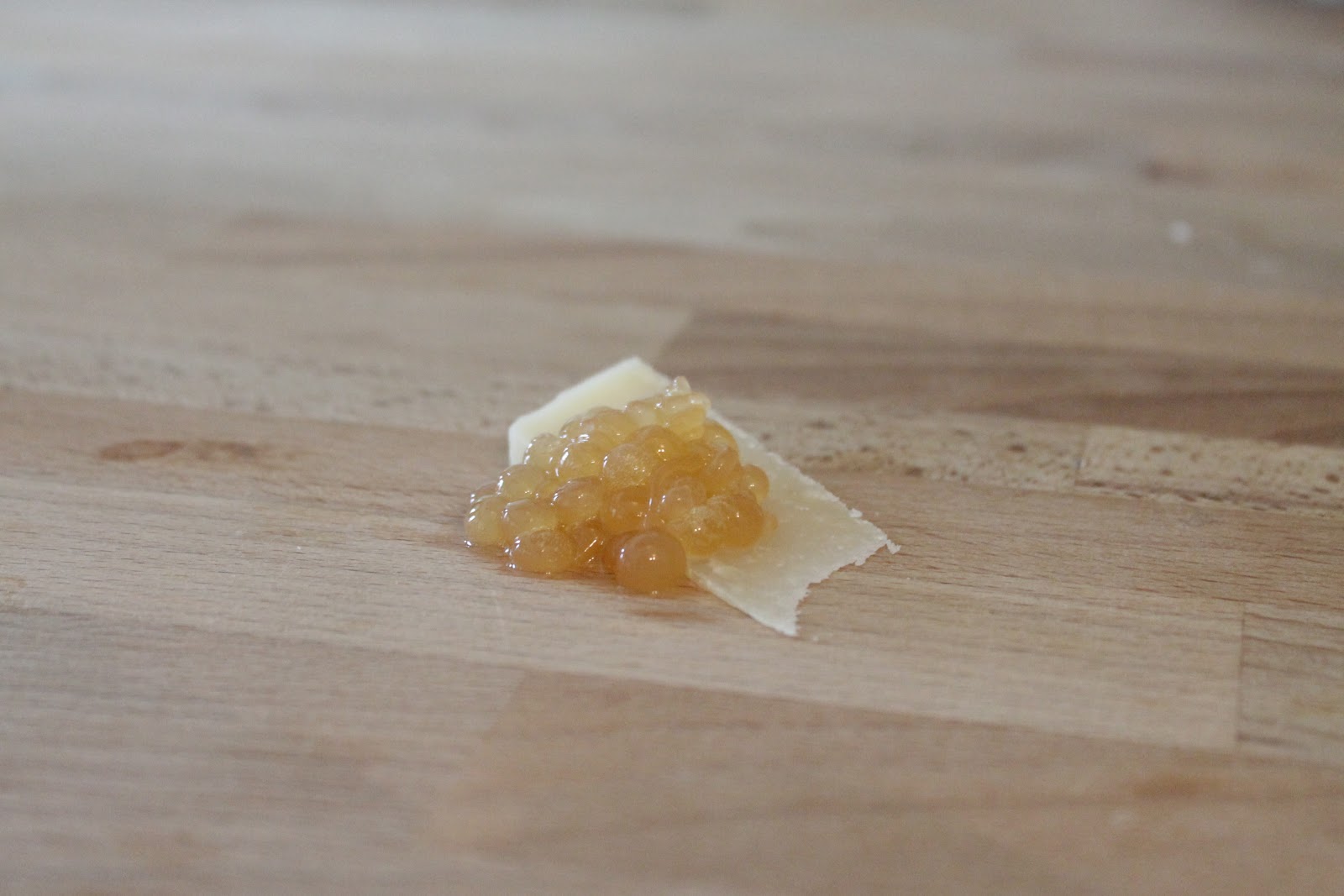
Apple juice spheres on a slice of parmesan!
So, yay! We had spheres! And they are really fun little pops of apple juice caviar.  But man oh man, this was not at all the breezy technique I had envisioned! It’s really finicky work.  In addition to the pH-finding, immersion blending, heating, chilling, careful and rapid dropping, and quick removing, it absolutely has to be done at the last minute because those spheres will continue to harden after they’re removed from the calcium bath, even if you rinse them in water.  That meant I would have to make my honey spheres table-side during the dinner party. But hey- the spheres are totally fun, and it’s a Science! dinner party after all, so a little experimentation at the table would be just fine.
How to Make Powdered Olive Oil

This is the second post in a series about planning a molecular gastronomy dinner party. Click here to read the first post about the blueprint for the big feast. These posts are also being featured on food52!

I had never had powdered olive oil before. In fact, I’d never even heard about it until this season of Top Chef, when chef Ty-lor Boring (best name ever) used it to top a cube of watermelon for a modernist cooking quickfire challenge. I so love this sort of magical transformation that molecular gastronomy makes possible. I imagined eating this dish: a sleek cube of watermelon capped with an unidentified, powdery substance, that upon tasting you realize is something totally familiar, but in a completely new form. I researched this technique online, and learned that it was actually pretty simple- all you need is tapioca maltodextrin and any liquid fat. Tapioca maltodextrin is pretty neat stuff- it’s derived from tapioca, is near flavorless, and is incredibly lightweight. For these reasons, processed food companies have long used it as a way to add volume, but not weight, to frozen dinners and dry mixes! I call shenanigans.

Anyway, tapioca maltodextrin is also prized for its ability to stabilize liquid fats so they can be turned into powder, so I ordered it to use for Dustin’s Science! birthday party dinner. I had plans to use it for two courses. First, I wanted to make powdered olive oil to top cubes of my favorite local mozzarella as part of a cheese plate. Second, I wanted to use it to make a powdered bacon fat that I could use to dust a sage-flecked miniature funnel cake- the goal being that it would look like the powdered sugar topping on a traditional funnel cake, but taste like bacon. I wasn’t sure that the powdered bacon fat would work, because I couldn’t find any mention of such a thing online, so I decided to test the tapioca maltodextrin-waters with a simple powdered olive oil trial run. Here’s what happened!

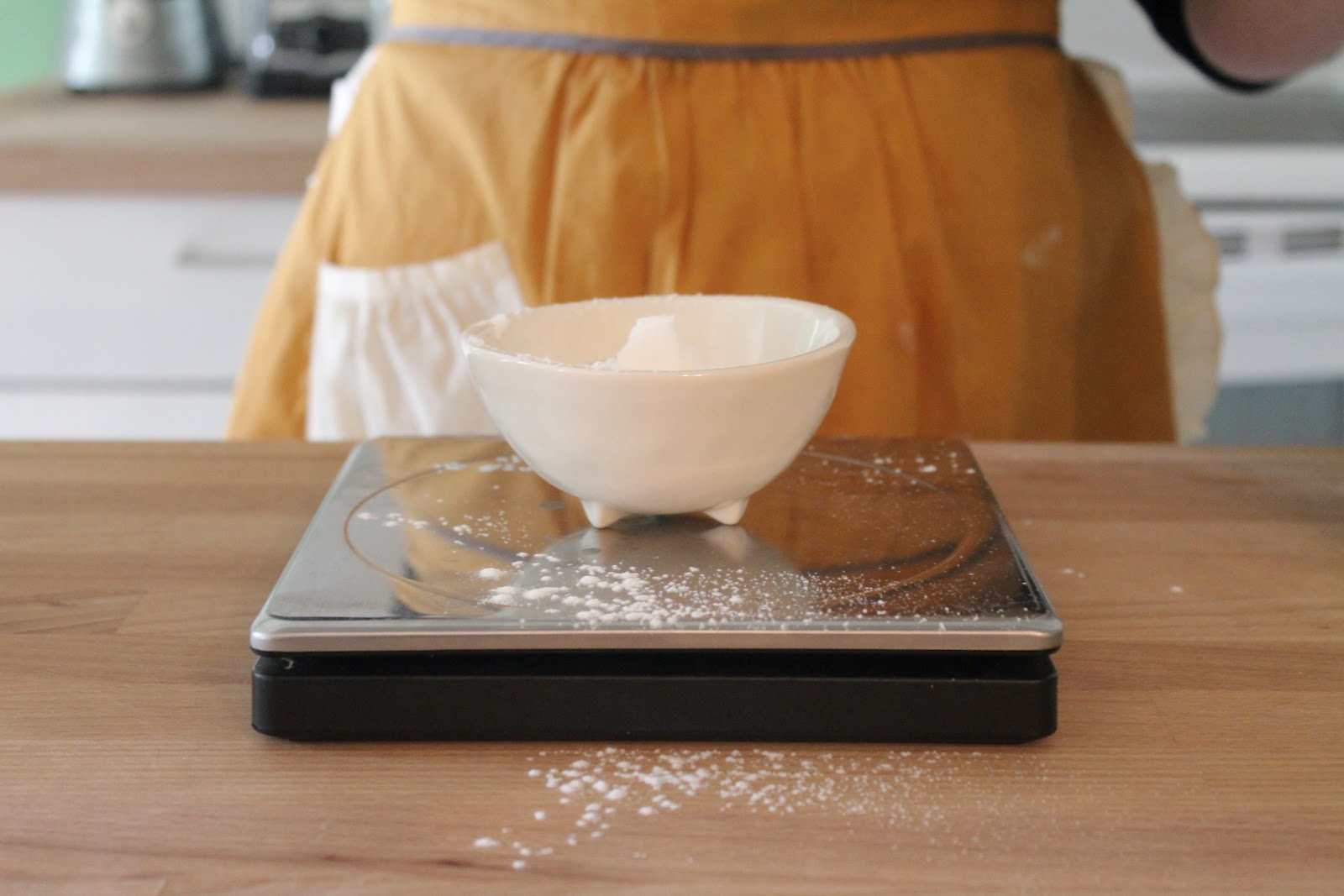
 A tiny bowl on a non-molecular gastronomy approved scale (all the recipes I read say that you should use a  scale that can measure down to tenths of grams, but I got by just fine with my standard kitchen scale).

 An errant sprinkling of the tapioca maltodextrin.  It’s a feathery, superfine powder, and impossible to use without spilling.

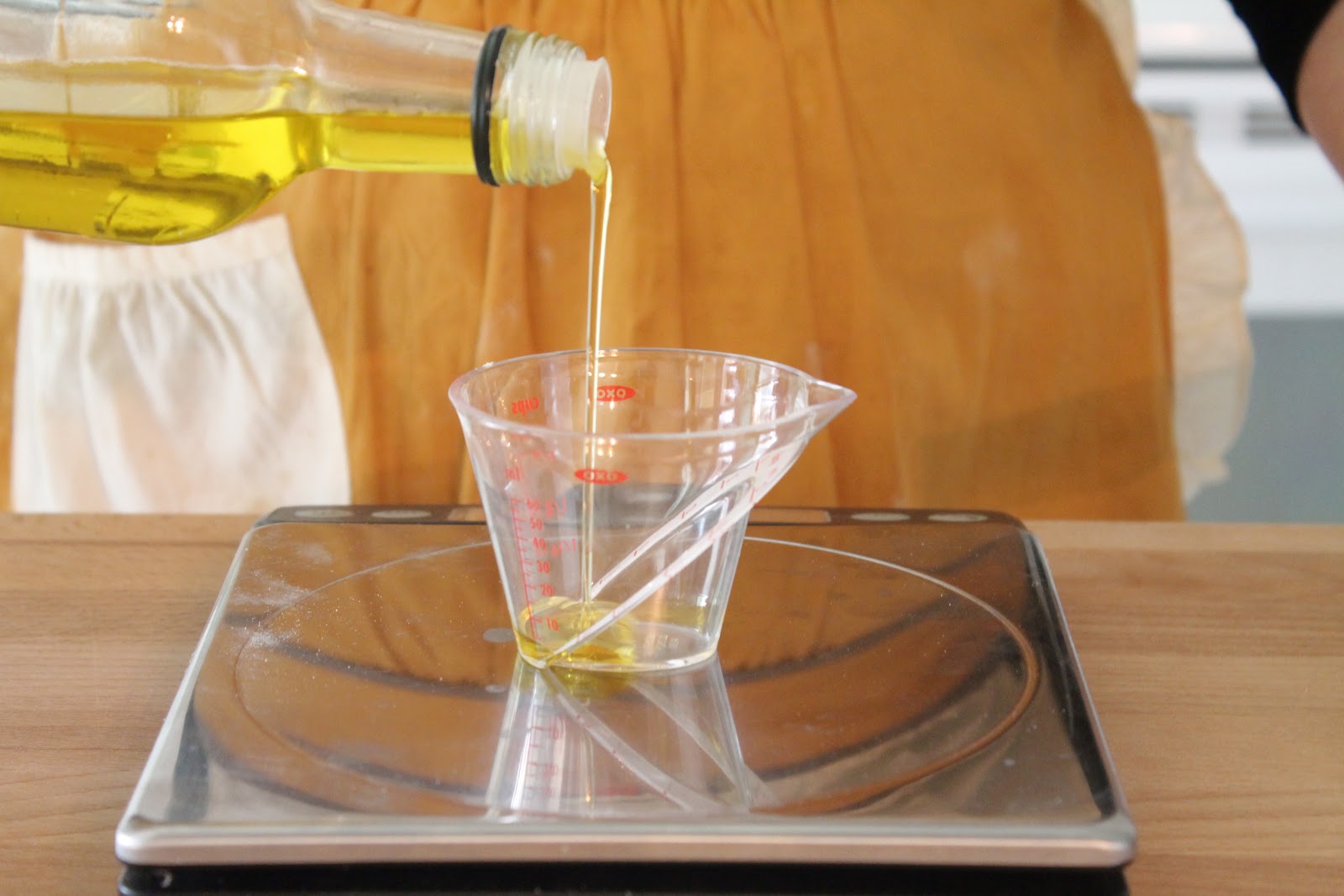
Measuring 16 grams of olive oil to mix with the 5 grams of tapioca maltodextrin.  You want a ratio of about 1 part powder to 3 parts liquid fat.

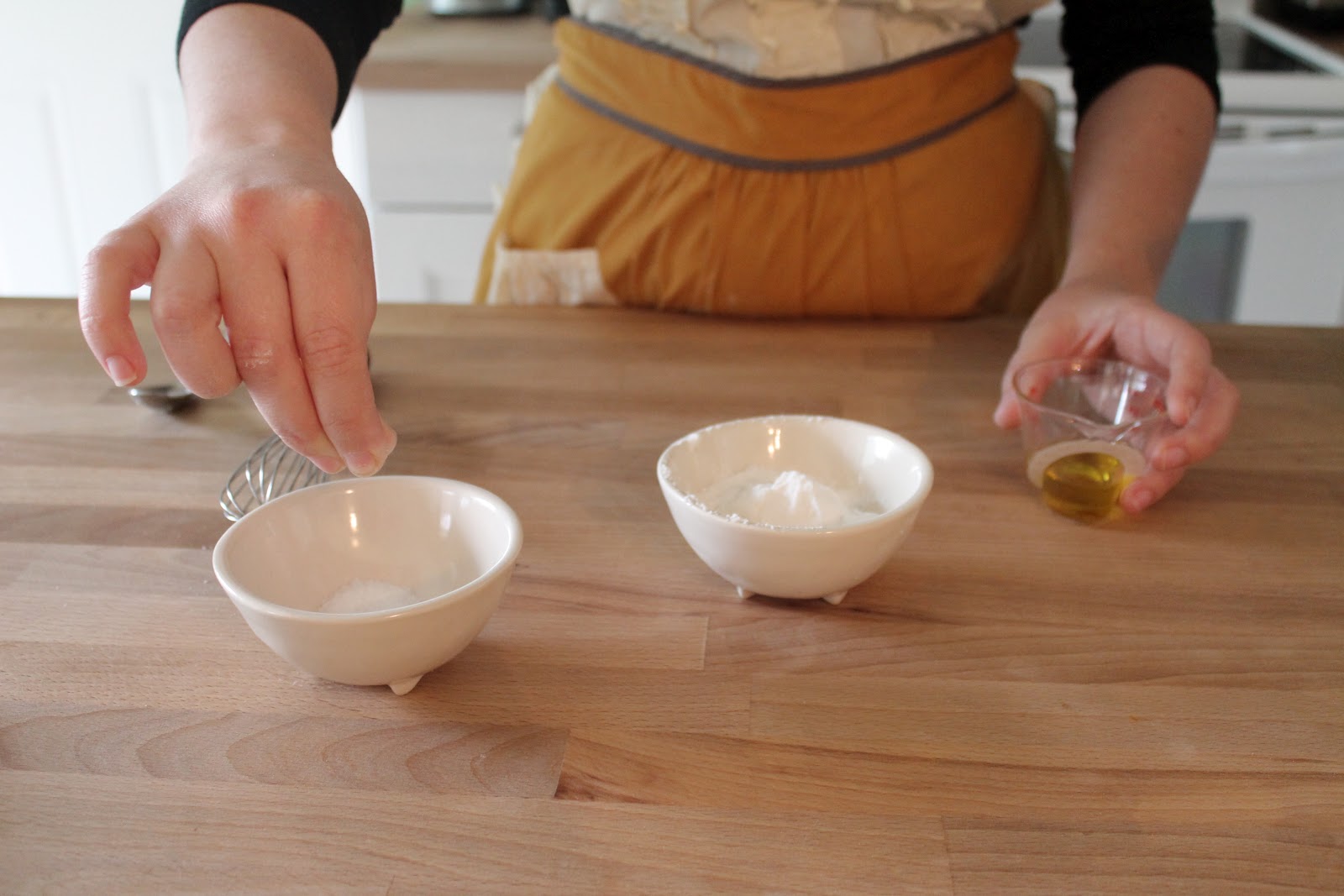
Adding a pinch of kosher salt.

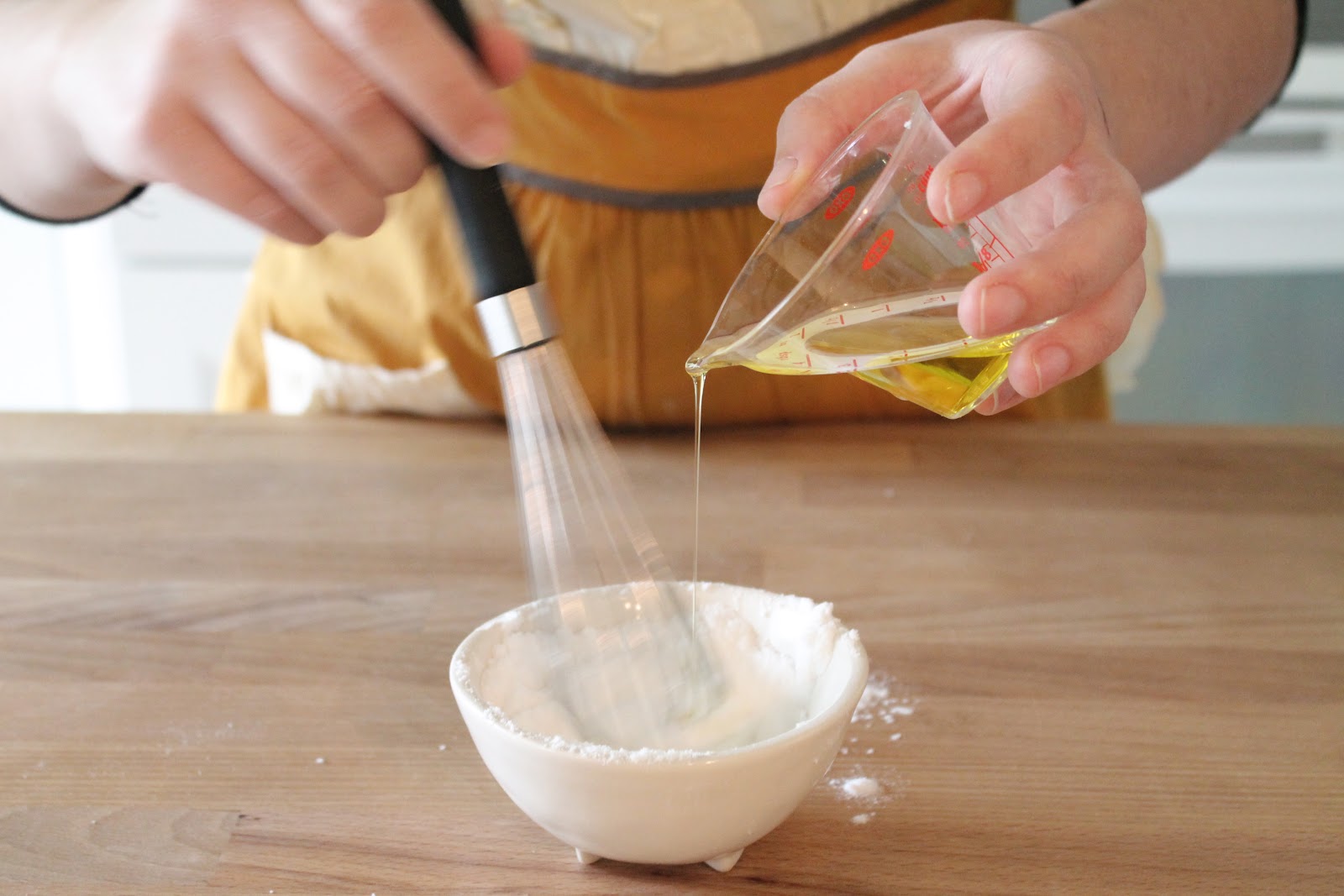
Oil meets powder! AKA, this bowl is too small.

The mixture should look a bit like a dry, lumpy biscuit dough.

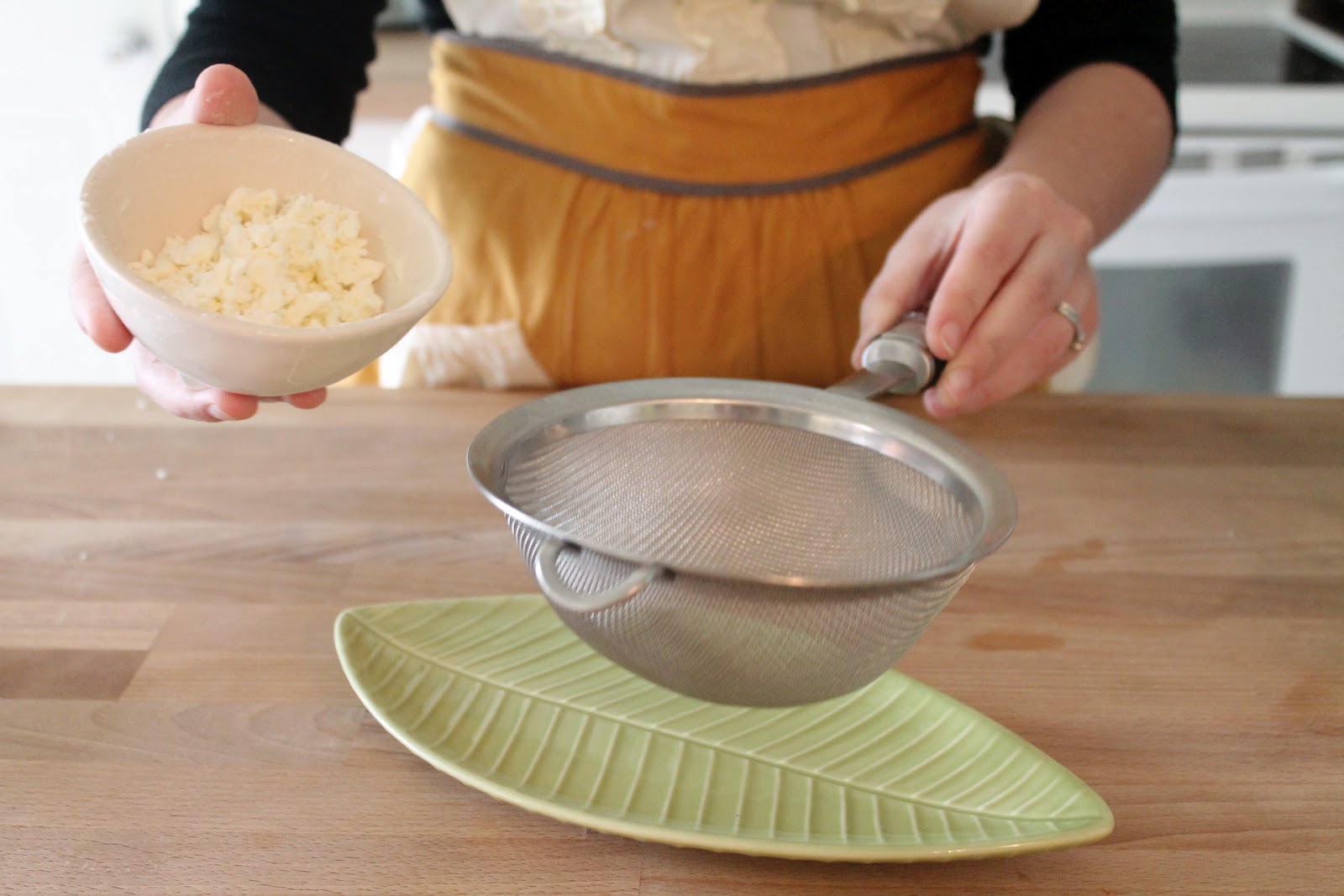
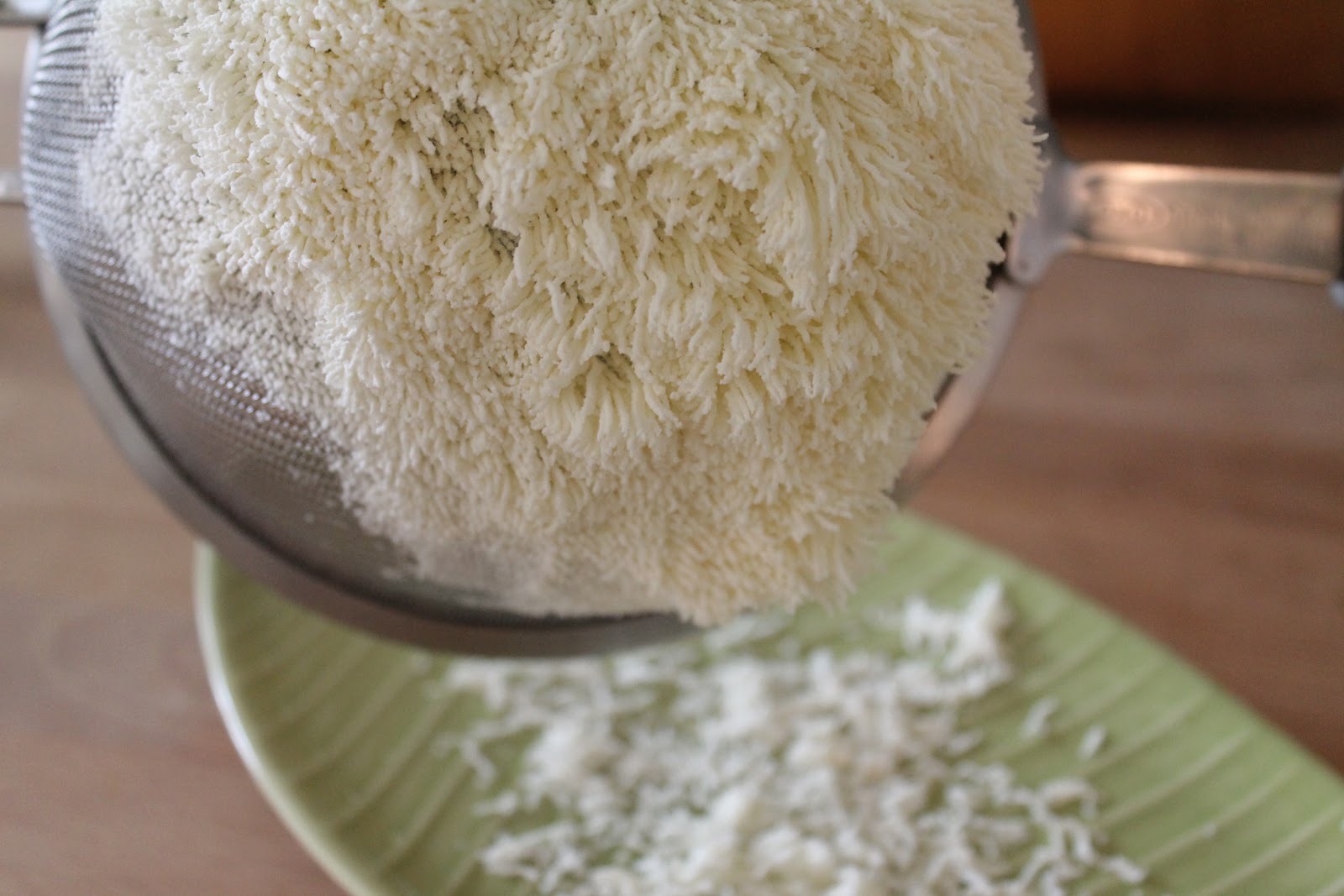
The recipe suggests pushing the mixture through a tamis for a finer powder- I used a fine mesh sieve.

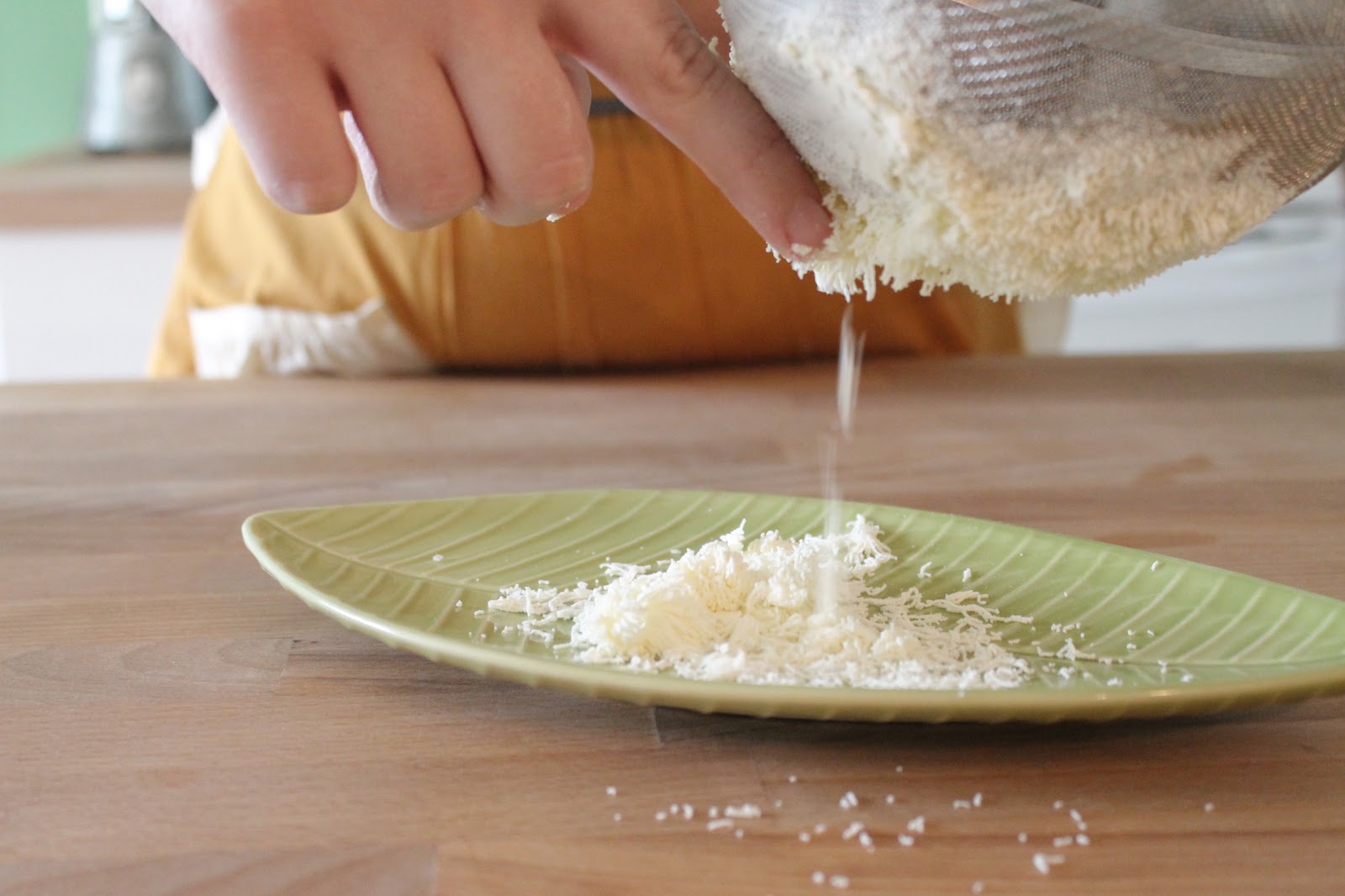
Pretty filaments of olive oil powder.

A final scrape.

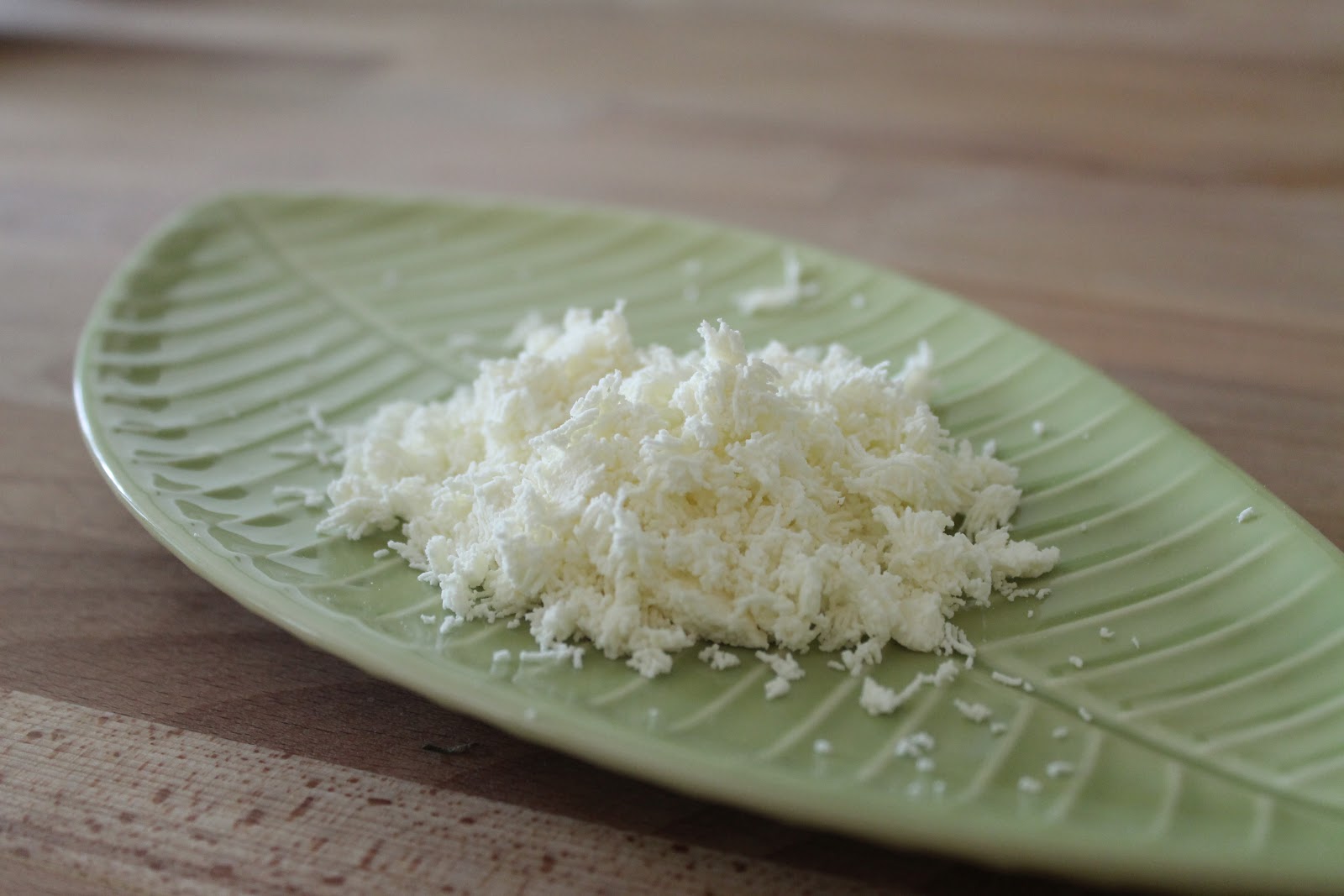
Voilà! Powdered olive oil!

The verdict? Absolutely magical- the stuff melts on your tongue as if you’ve taken a swig of oil from the bottle. It didn’t look quite as powdery as I was expecting, probably because I didn’t have a tamis, but the end product was excellent all the same. I used my every-day olive oil for this attempt, not wanting to waste the good stuff, and therefore the flavor wasn’t all that it could be. After this trial run, I decided that instead of purchasing a really great oil for the party, I would make a simple garlic-infused oil, and then powder-ize that to top cubes of local mozzarella.

Here’s a video of me trying, and almost failing, to reproduce the technique with bacon fat!

Up next: I try my hand at turning apple juice into caviar!

Planning a Molecular Gastronomy Birthday Party

This is the first post in a series about a Science!-themed birthday party. These posts are also being featured on food52!

Molly, my best friend since childhood, had been talking for months about throwing her boyfriend, Dustin, a very special surprise 30th birthday party. When Molly and I weren’t sprawled on her futon eating nutty bars and watching Ricki Lake in junior high (there’s not a lot to do in rural Buda, Texas), I was poring over cookbooks and studying anything remotely related to Martha Stewart. She was my idol. And even though in those days I dreamed of being a high-powered bureaucrat working in the Office of Management and Budget (I don’t know why I was so specific about that), I also aspired to be the sort of  über-hostess who greets her guests at the door with a shiny platter of warm gougères. Now I’m 28. I worked in politics fresh out of college and absolutely hated it, but my love of entertaining has remained. And since I never gave up my Martha addiction, and have used every birthday and gift-giving holiday to stockpile more white platters and pieces of cooking equipment, I have a reputation as being the person you go to for help with a menu or tips on planning a dinner party. 
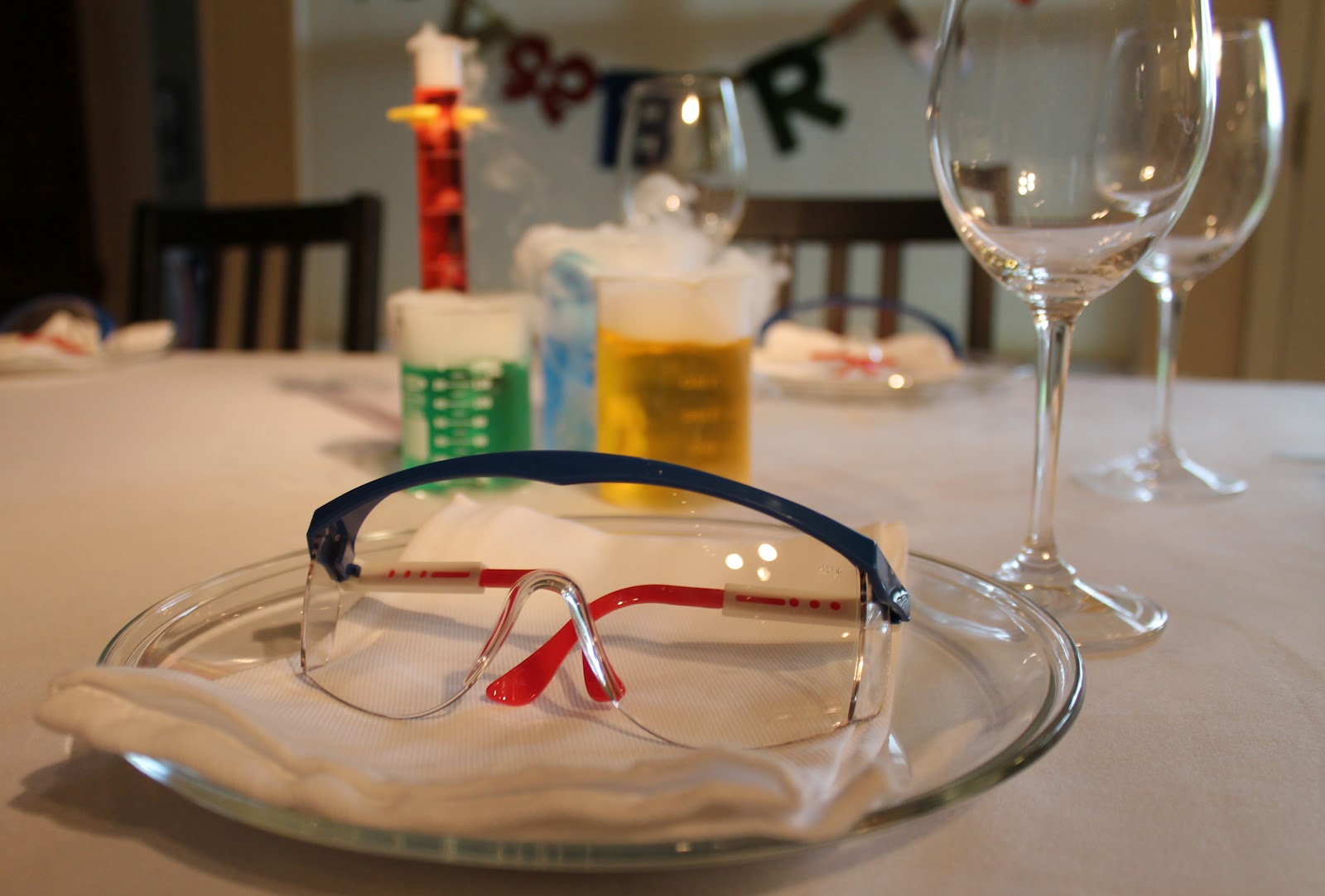
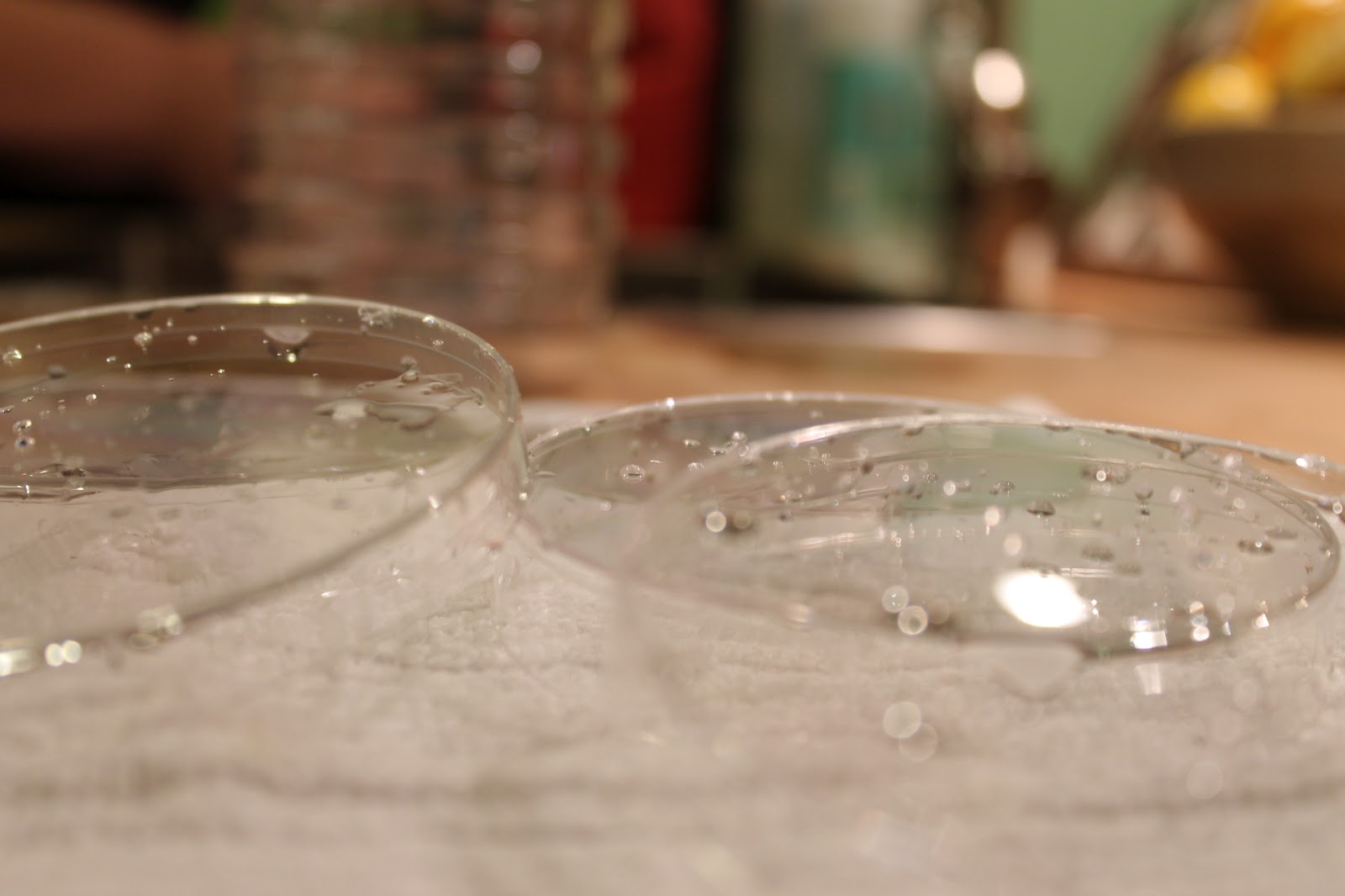
So Molly asked for my help planning the party, and I was thrilled to have a big event to daydream about. Dustin loves so many different things, though, that we were having trouble picking a theme: Star Wars? Comics? Video Games? Lord of the Rings? I spent several nights brainstorming ways to make a meal match these themes, but I wasn’t coming up with anything great. Much to my husband’s dismay, I’m not a Star Wars fan. The only food-related thing I could remember from the movies was a blue milk-type drink. :/ Lord of the Rings has rich food-pairing potential, but we’d been gathering together on Sunday nights for an English-themed meal before watching Downton Abbey, so I feared I’d used up most of my Tolkien-esque material. Then, inspiration struck. Dustin, a biotechnologist, loves all things science. He routinely posts links to various bits of science-geekery on Facebook: pictures of Earth from space, nanotechnology for waterproofing sneakers, etc. What if we made a Science!-themed birthday party, complete with molecular gastronomy techniques, foods in petri dishes and drinks in test tubes?! Yes! We were off and running.  
When I was in college, I used to watch the PBS Create channel (cooking shows!!) between classes. On one episode of Made in Spain, José Andrés showed a few fun dishes from his restaurant, Minibar. One dish in particular stuck with me- a caprese skewer where the skewer was a pipette filled with a mozzarella cream that you squeezed into your mouth as you nibbled at the tomato and basil. I was transfixed! The more I learned about restaurants like Alinea and El Bulli, the more I became enthralled with the idea of eating a meal that could so surprise and delight you. Yes, I love simple food, deliciously prepared with the finest ingredients. But there’s something so magical about biting into something you think is an olive, only to have it be a spherical packet of intensely-flavored olive juice. It’s like being a kid again. Or so I imagined- I have never had the opportunity to eat at a modernist-style restaurant. But thanks to the internet, the chemicals and tips for how to create dishes like this at home are just a few clicks away. I was thrilled at the prospect of getting to try dishes like the ones I’d read about, and even more excited to get to do it all with my friends!
To begin planning the menu, I thought back to the dishes I’d read about or seen on television. We would definitely have a course where a pipette was used as a skewer. And fortuitously, just before we started planning the party, an episode of Top Chef aired with a quickfire challenge about modernist cooking. I remembered three dishes in particular that I thought I could emulate: a dish with powdered olive oil, another with a faux caviar that actually tasted like dill (a technique called spherification), and a Miracle Berry tasting plate (though it sounds like something you’d take at a rave, Miracle Berry is a totally legit pill that makes sour things taste sweet for an hour or two). I had ideas for four courses already! Through random googling, I came across jello shots in petri dishes. But this was a classy party, a gougères-on-shiny-platters-party, so I would make a savory gelée instead- perhaps inspired by an item on the Uchi menu, because I know they often employ savory gelées, and because reading the Uchi menu is akin to studying the Flavor Bible- it’s full of inspired combinations of ingredients. So I had plans for a fifth course. And look! Petri dishes and pipettes! This was really starting to sound science-y.  

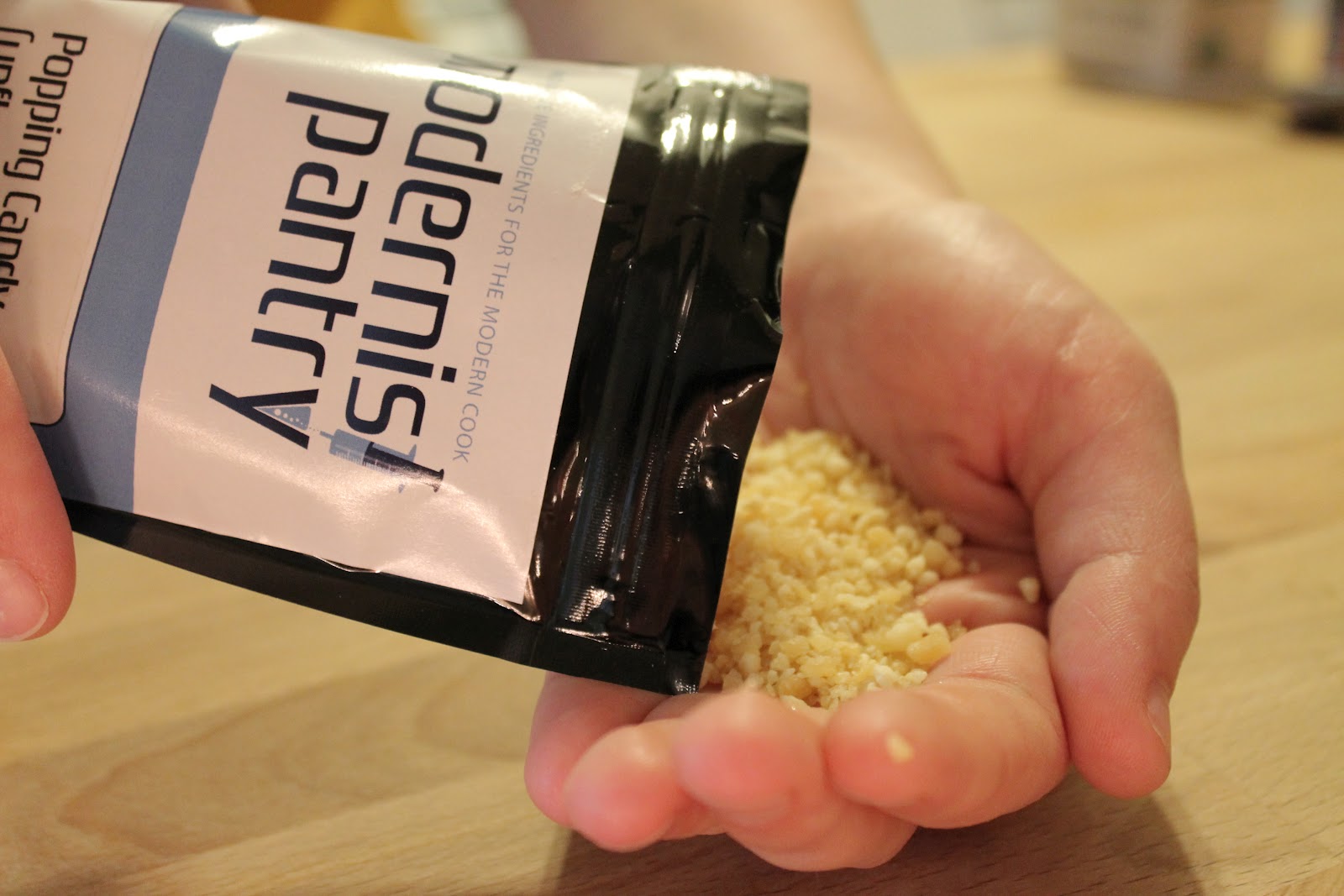
Little by little, the menu began to take shape. A food52 article on Superbowl fare reminded me of Oui, Chef’s ridiculously delicious herbed beef skewers– sublime party fare that, along with the horseradish cream, lent themselves perfectly to the pipette course. A very helpful site, http://www.molecularrecipes.com/, yielded ideas for a cheese plate course where I could feature the powdered olive oil and spherified honey, in addition to grapes that had been carbonated with dry ice. Amanda’s mention of popped sorghum on the food52 “52” got me thinking about a plate of miniaturized fair foods. And when I was ready to purchase the chemicals for the faux caviar and the powdered olive oil from Modernist Pantry (a great online shop that thankfully allows you to buy these ingredients in small home-cook sized packages, as opposed to the one-pound tubs Amazon was selling), I made a last-minute impulse purchase of some unflavored pop rocks to incorporate into another savory course. Top it off with KelseyTheNaptimeChef’s chocolate cake decorated to look like the periodic table, and we had ourselves the start of a seven-course feast!

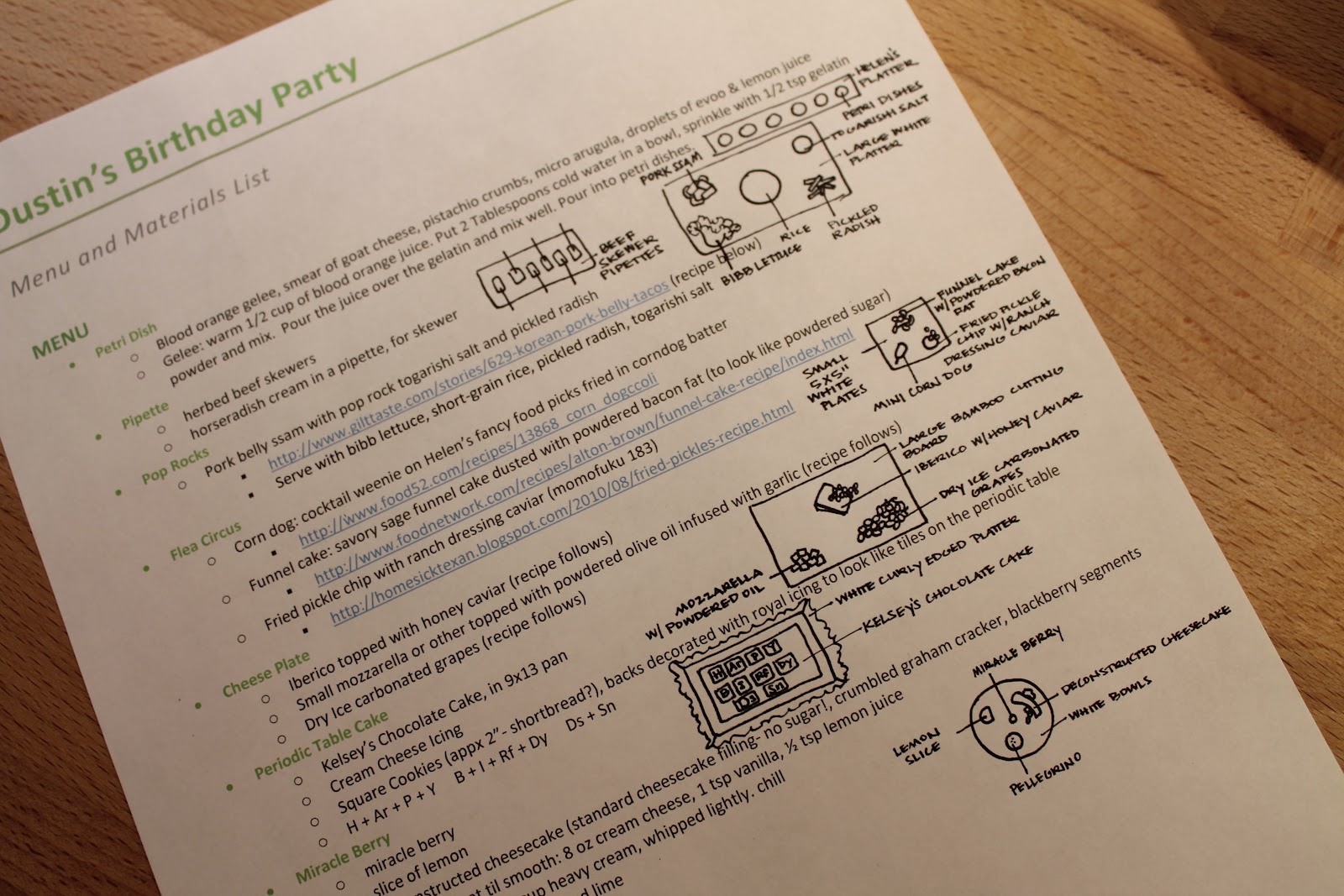
After much, much more tinkering, I finally had a working menu. To help plan, I typed up the menu with links to recipes I’d be using that I hadn’t made before. I wrote up a shopping list for items I would need, with sections for the farmers’ market and grocery store, including when the items would need to be purchased (for example, the meat I used was purchased at the farmers’ market the week before the party because it is sold frozen, so I needed lead time to defrost it). I sketched (and helenthenanny resketched- she’s a much tidier artist than me!) pictures of what the courses would look like, so I could get a sense of what equipment I would need to plate each dish, and so I could make sure I had enough serving pieces to make every course look the way I envisioned it. Lastly, I made up a bulleted to-do list for Thursday, Friday, and Saturday (the day of the party), with the bullets listing everything that needed to be done in the order I would need to do it. All this planning really helped me keep cool and stay on task during the hours of prep work. Planning the party was such fun- I can’t wait to show you how it turned out!

Stay tuned for future posts about my first attempts to powder-ize and sphere-ify things, all leading up to the Big Feast itself.